

👉 Ultimate Guide to the best Kopitiam Drinks
A kopitiam (from kopi, Malay for “coffee”, and tiam, Hokkien for “shop”) is a cultural institution in Malaysia and Singapore. First established by Hainanese immigrants in the early 1900s, these no-frills cafés became essential to working-class life—offering affordable food, strong local brews, and a communal place to gather.
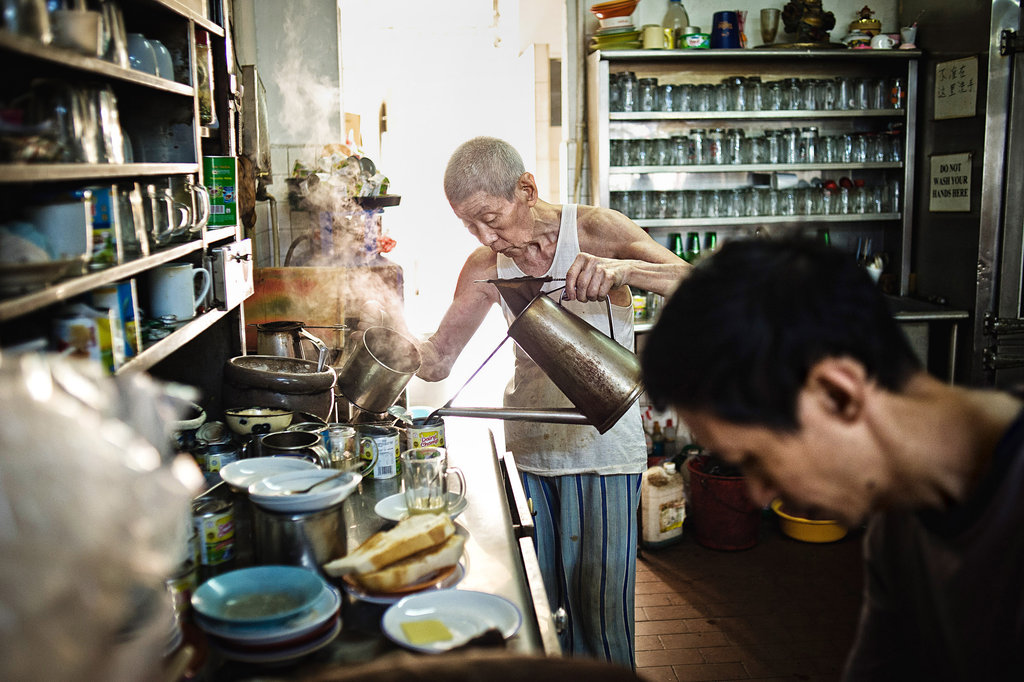
Kopitiams in Malaysia vs Singapore
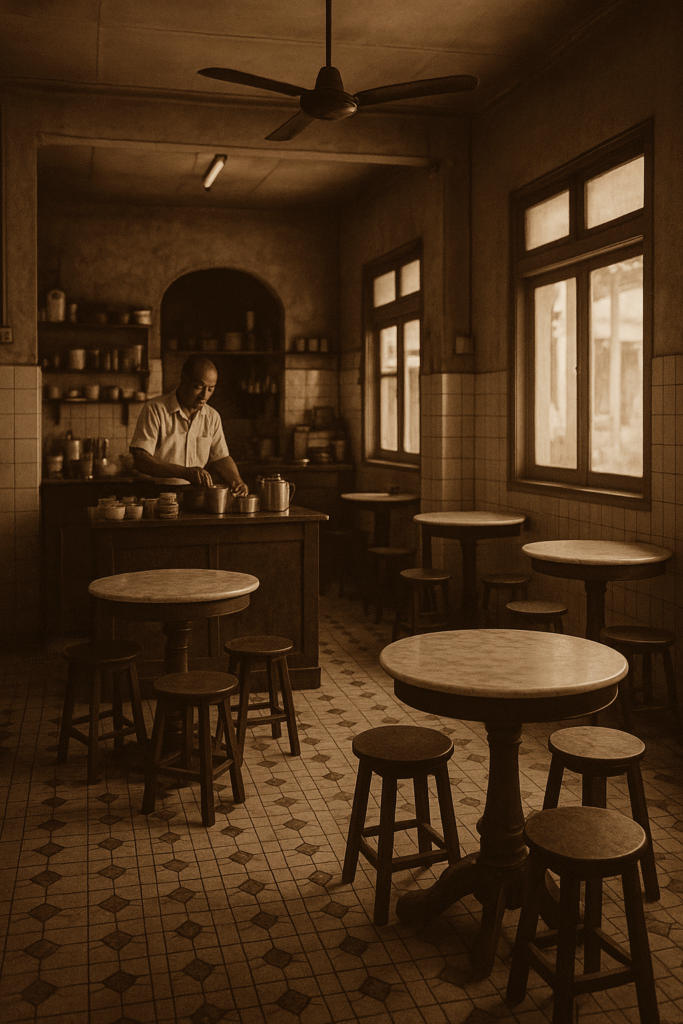
While the setup is similar across both countries—plastic stools, marble-top tables, clinking cups—regional preferences differ slightly. Singapore tends to favour slightly milder brews, while Malaysia leans bold and rich. In Penang, for example, kopi is often roasted with butter and sugar for a smoky caramel flavour.
Why Kopitiams Still Matter Today
Kopitiams are more than nostalgic throwbacks—they’re living hubs of heritage. In an era of artisan cafés and third-wave espresso, the humble kopitiam continues to serve comfort, familiarity, and cultural pride in every cup.
Table of Contents
Understanding Kopitiam Drink Codes
The Unique Language of Kopi and Teh
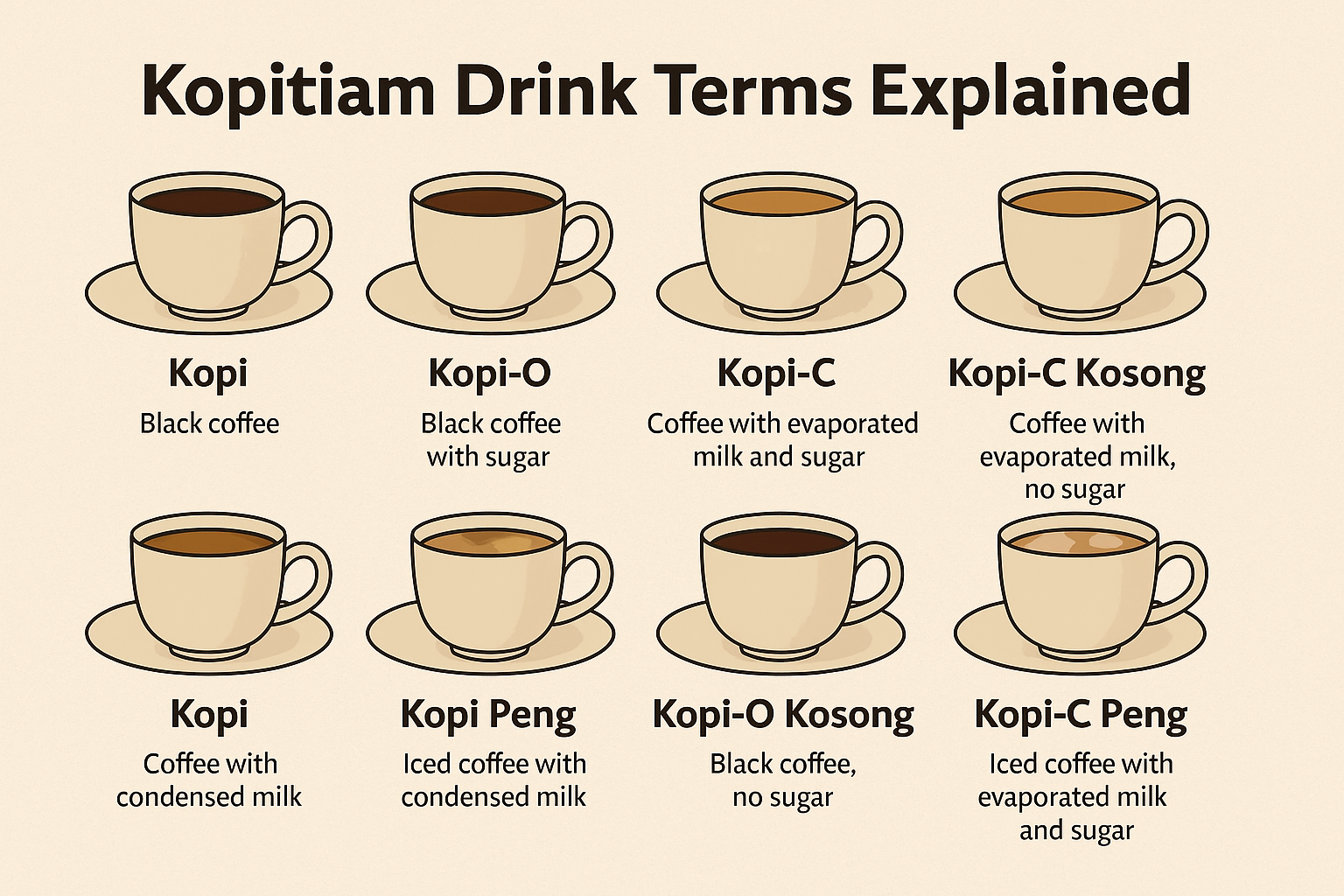
Ordering at a kopitiam isn’t just about taste—it’s a local language of its own. Here’s how it works:
- “O” means no milk (just sugar and water).
- “C” means evaporated milk.
- “Kosong” means no sugar.
- “Peng” means iced.
So, a kopi-C kosong peng = iced coffee with evaporated milk, no sugar.
Common Abbreviations Explained
| Term | Meaning |
|---|---|
| Kopi | Coffee with condensed milk |
| Kopi-O | Black coffee with sugar |
| Kopi-C | Coffee with evaporated milk & sugar |
| Kopi Kosong | Black coffee with no sugar |
| Kopi Peng | Iced coffee |
| Teh | Tea with condensed milk |
| Teh-O Kosong | Plain black tea, unsweetened |
| Cham | A 50/50 blend of coffee and tea |
| Milo Dinosaur | Iced Milo with Milo powder on top |
These shorthand codes not only simplify the order, but also reflect a deep-rooted local pride in coffee-shop culture.
Kopi Series – Local Coffee Like You’ve Never Had
Few coffee cultures are as rich, bold, and uniquely expressive as the kopi tradition found in Southeast Asia. Unlike Western espresso or drip coffee, kopi is roasted with margarine and sugar, giving it a distinct aroma and caramelised depth that’s unmistakably local.
✅ Kopi vs Kopi-O vs Kopi-C
| Drink | Description | Who It’s For |
|---|---|---|
| Kopi | Coffee with condensed milk (sweet & creamy) | Classic drinkers who love full flavour |
| Kopi-O | Black coffee with sugar, no milk | For those who like it bold but balanced |
| Kopi-C | Coffee with evaporated milk (less sweet) | Preferred by those who want creamy but light |
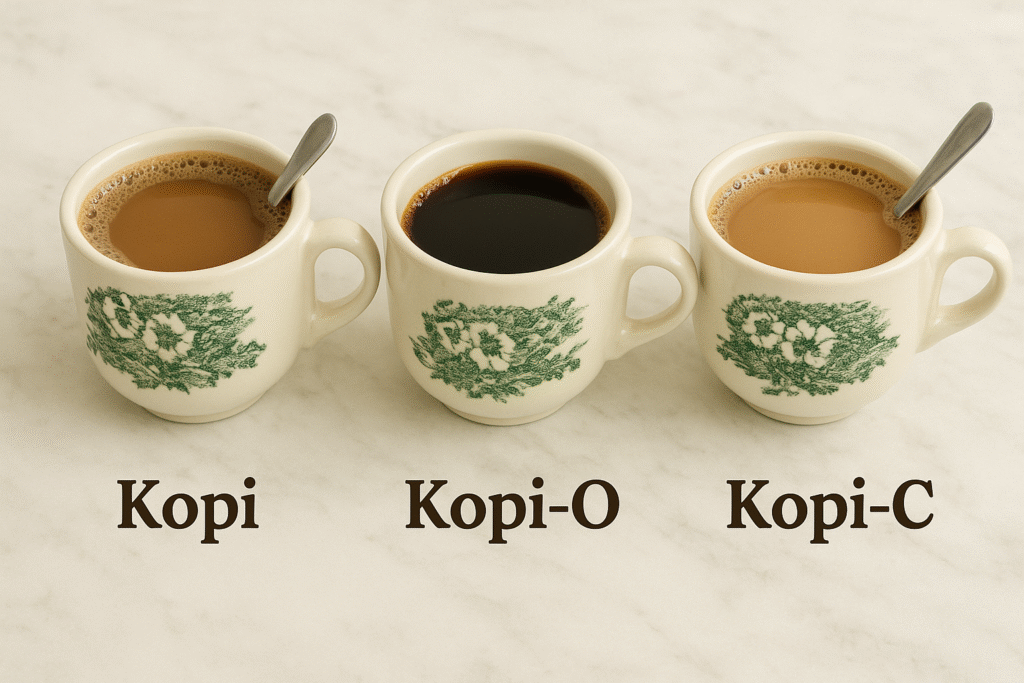
All three are brewed using a “sock” filter and served hot in old-school ceramic cups (often with green floral prints).
✅ Variations You Should Know
Kopi Kosong – No sugar, no milk. Just strong black coffee.
Kopi Peng – Iced version of kopi. Perfect for humid afternoons.
Kopi Gao – Extra strong brew. (Think: kopi on steroids.)
Kopi Po – Weaker version for a gentler kick.
Kopi Tarik – “Pulled” coffee, frothed by pouring from cup to cup at height.
Each order reflects personal taste—and sometimes, personality. More on that later.
✅ Teh Series – The Art of Tea at the Kopitiam
While kopi often steals the spotlight, the teh series—kopitiam-style tea—is just as rich, nuanced, and beloved. Whether served hot or over ice, with milk or without, teh is more than a drink; it’s a ritual of taste, comfort, and culture.
Teh, Teh-O, Teh-C: What’s the Difference?
| Drink | Description | Flavor Profile |
|---|---|---|
| Teh | Tea with condensed milk (sweet & creamy) | Rich, velvety, traditional |
| Teh-O | Black tea with sugar only | Strong, slightly astringent |
| Teh-C | Tea with evaporated milk & sugar | Lighter, creamier, less sweet |
Pro Tip: If you’re sensitive to sweetness, go for Teh-C or Teh-O Kosong (no sugar).
✅ Iced & Specialty Teh Variants
Teh Peng – Iced teh with condensed milk. Classic for hot days.
Teh-C Peng – Iced, less sweet, with evaporated milk.
Teh-O Peng – Iced black tea with sugar.
Teh-O Kosong Peng – Iced black tea, no sugar.
Teh Halia – Spicy ginger tea, often served with milk for extra richness. Great for digestion.
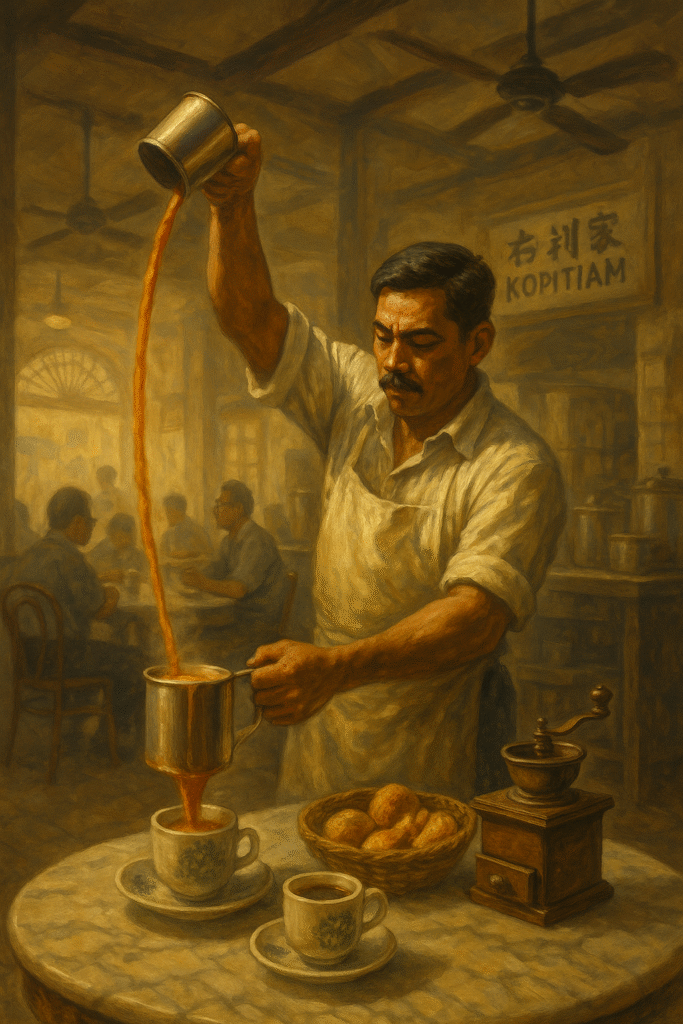
Teh Tarik – “Pulled” tea—frothed and aerated by skillfully pouring between cups. Smooth and theatrical.
Which Teh for Which Mood?
| Mood | Your Teh Match |
|---|
| Feeling nostalgic | Teh Tarik – A Malaysian-Singaporean classic |
| Need a refresh | Teh-O Peng – Light, cold, energizing |
| Watching your sugar | Teh-C Kosong – Creamy, not cloying |
| Want to warm up | Teh Halia – Comfort in a cup |
💬 Local Tip:
In a rush? Just say your order fast:
- “Teh-C kosong peng!” = Iced tea with evaporated milk, no sugar
- “Teh tarik satu!” = One frothy pulled tea, please
- “Teh-O kosong!” = Plain tea, hot, no sugar
Knowing how to order like a local is part of the charm—and gets you serious street cred at the kopitiam.
Iced & Specialty Teh Variants
Which Teh for Which Mood?
| Mood | Your Teh Match |
|---|---|
| Feeling nostalgic | Teh Tarik – A Malaysian-Singaporean classic |
| Need a refresh | Teh-O Peng – Light, cold, energizing |
| Watching your sugar | Teh-C Kosong – Creamy, not cloying |
| Want to warm up | Teh Halia – Comfort in a cup |
Beyond Kopi and Teh – Other Iconic Kopitiam Beverages
While kopi and teh rule the traditional drink menu, kopitiams offer a full beverage lineup that caters to kids, elders, and anyone looking for something unique or nostalgic. These local favourites range from sweet malted drinks to tangy thirst-quenchers—and every one has its own fan base.
| Cham Type | Description |
|---|---|
| Cham Hot | Great for rainy mornings, with condensed milk |
| Cham Peng | Iced version, perfect on hot days |
| Cham Kosong | Without sugar, for a bolder taste |
Milo – The Childhood Classic That Never Gets Old
Milo is a chocolate malt drink adored across generations.
| Type | Description |
|---|---|
| Milo (hot or iced) | Creamy and energizing |
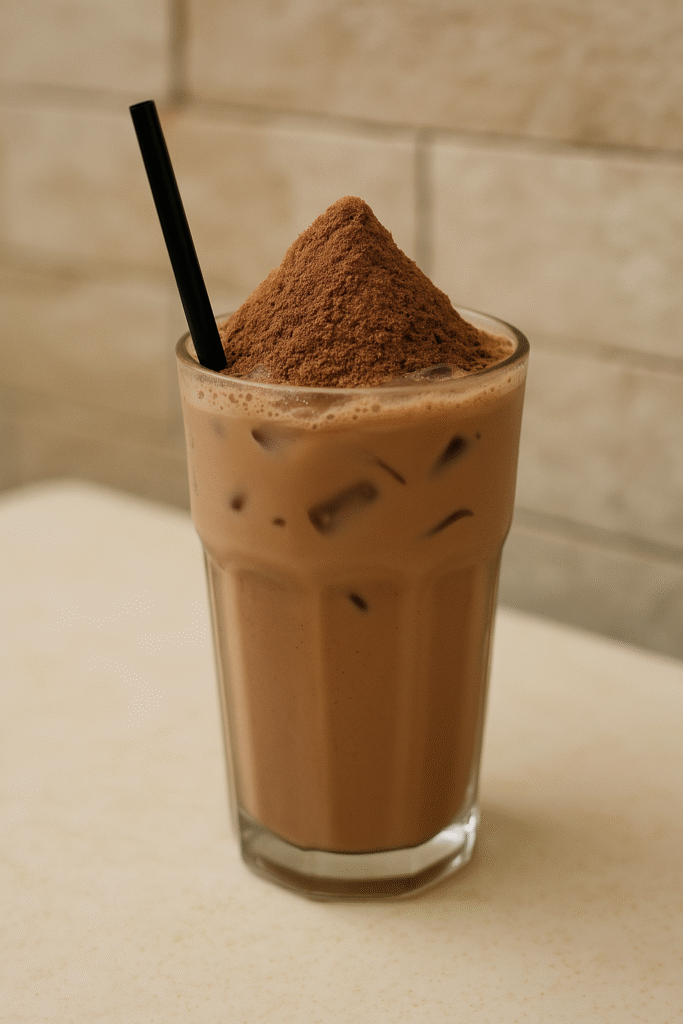
| Milo Dinosaur | Iced Milo with a mountain of undissolved Milo powder on top. Sugar rush guaranteed! |
| Milo Godzilla | Dinosaur + a scoop of vanilla ice cream (yes, it exists!) |
🧒 If you didn’t grow up with Milo, you missed a delicious rite of passage.
Barley – A Soothing Local Staple
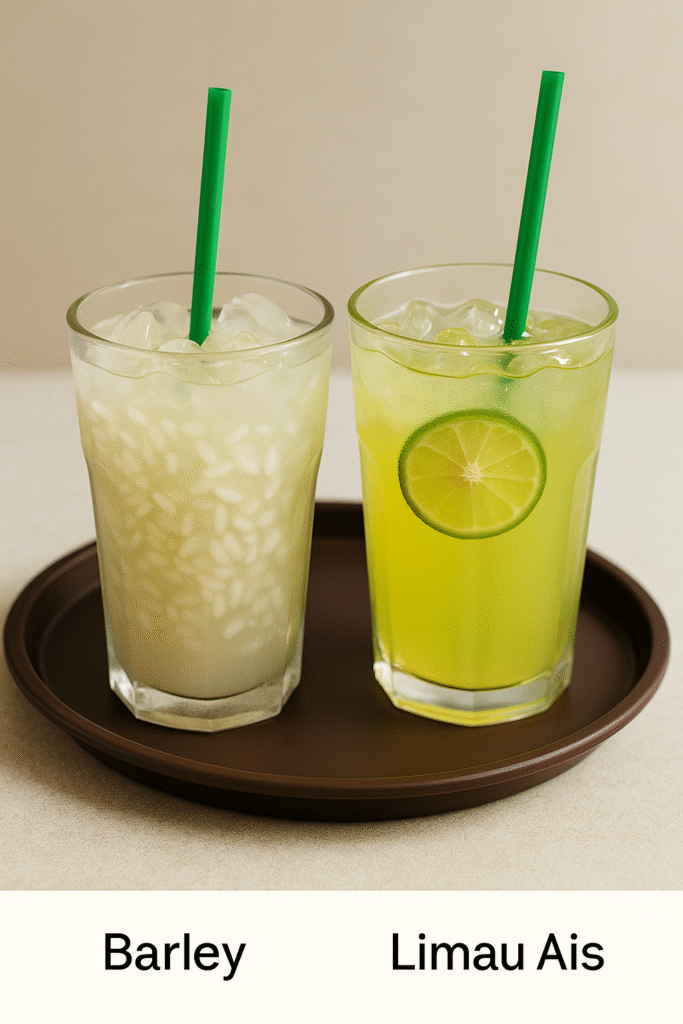
Barley water is light, comforting, and slightly nutty. Made by boiling pearl barley, it’s served hot or cold with a bit of sugar or lemon.
Barley Limau – With lime juice added—sweet and tangy.
Barley Hot – Soothes sore throats.
Barley Peng – Refreshing, not overly sweet.
Must Try Other Beloved Kopitiam Drinks
| Drink | Description |
|---|---|
| Horlicks | Creamy malted milk drink, like Milo’s gentler cousin |
| Susu Panas | Just sweetened hot milk—popular among elders |
| Limau Ais | Iced lime juice; sweet, citrusy, and thirst-quenching |
| Bandung | Rose syrup with evaporated milk; pink, floral, and sweet |
👀 Fun Fact:
Most kopitiam drinks are customisable. Want Milo with less sugar? Say “Milo kurang manis.” Want your barley without sugar? Say “Barley kosong.” Your drink, your way.
👍 How to Order Like a Local
Ordering a drink at a kopitiam isn’t just about quenching your thirst—it’s a rite of passage. Locals don’t use long sentences or point to menus. Instead, they speak a kind of shorthand that’s fast, rhythmic, and understood instantly by every kopi uncle.
Here’s how you can sound like a pro at the counter.
Insider Tips from Regulars
Practice combinations. Try saying them aloud until you’re comfortable:
→ “Cham peng kurang manis”
→ “Barley limau kosong”
Speak clearly and confidently. Kopitiam servers are fast and efficient—don’t fumble!
Use local slang. If you’re in Malaysia, it’s “satu kopi” (one coffee). In Singapore, you might say “kopi satu” instead.
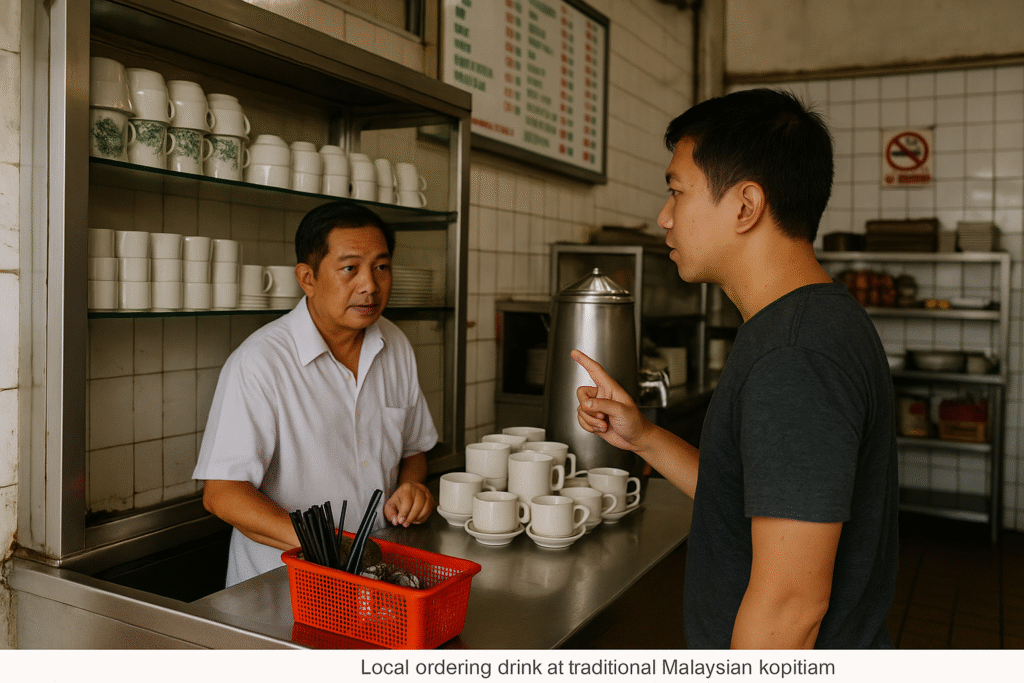
Must-Know Terms for First-Time Visitors
| Term | Meaning |
|---|---|
| O | No milk (black coffee or tea) |
| C | Evaporated milk |
| Kosong | No sugar |
| Peng | Iced |
| Term | Meaning |
|---|---|
| O | No milk (black coffee or tea) |
| C | Evaporated milk |
| Kosong | No sugar |
| Peng | Iced |
Insider Tips from Regulars
🚫 What Not to Say (If You Want to Blend In)
❌ “Can I have a coffee with no sugar and evaporated milk please?”
✅ “Kopi-C kosong.”
❌ “I’d like a tea with condensed milk, iced.”
✅ “Teh peng.”
Stick to the lingo—it’s fast, efficient, and part of the experience.
The Kopitiam Breakfast Experience 🔗
More than a meal — it’s a morning ritual passed down through generations.
No Ultimate Guide to the Most Loved Kopitiam Drinks would be complete without a look at the most iconic pairing of all time: kopi, kaya toast, and soft-boiled eggs. This breakfast isn’t just nostalgic—it’s symbolic. It reflects balance, simplicity, and community.
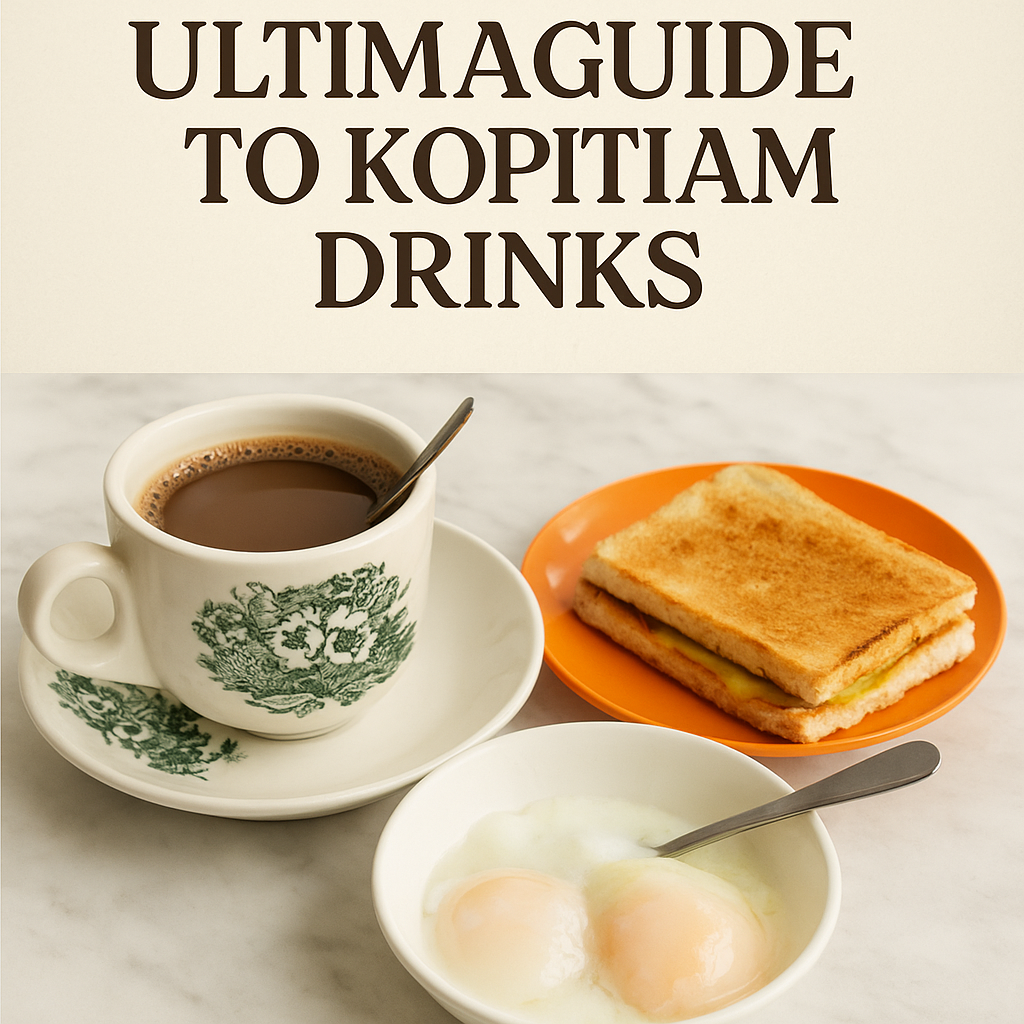
| Item | Description |
|---|
| Kaya Toast 🥪 | Toasted white bread with a slab of butter and a thick spread of kaya (coconut jam). Often grilled for a smoky crunch. |
| Soft-Boiled Eggs | Cracked into a saucer, served warm. Eaten with soy sauce and pepper. Stirred gently with a spoon. |
| Kopi / Teh | The drink that ties it all together. Whether hot or iced, strong or mild, it completes the ritual. |
The idea is balance:
- Kaya = sweet
- Butter = salty
- Eggs = silky
- Kopi = bitter but smooth
This combo is loved across age groups, from retirees to students, and often eaten communally at large round tables.
Sweet vs Savoury Pairings
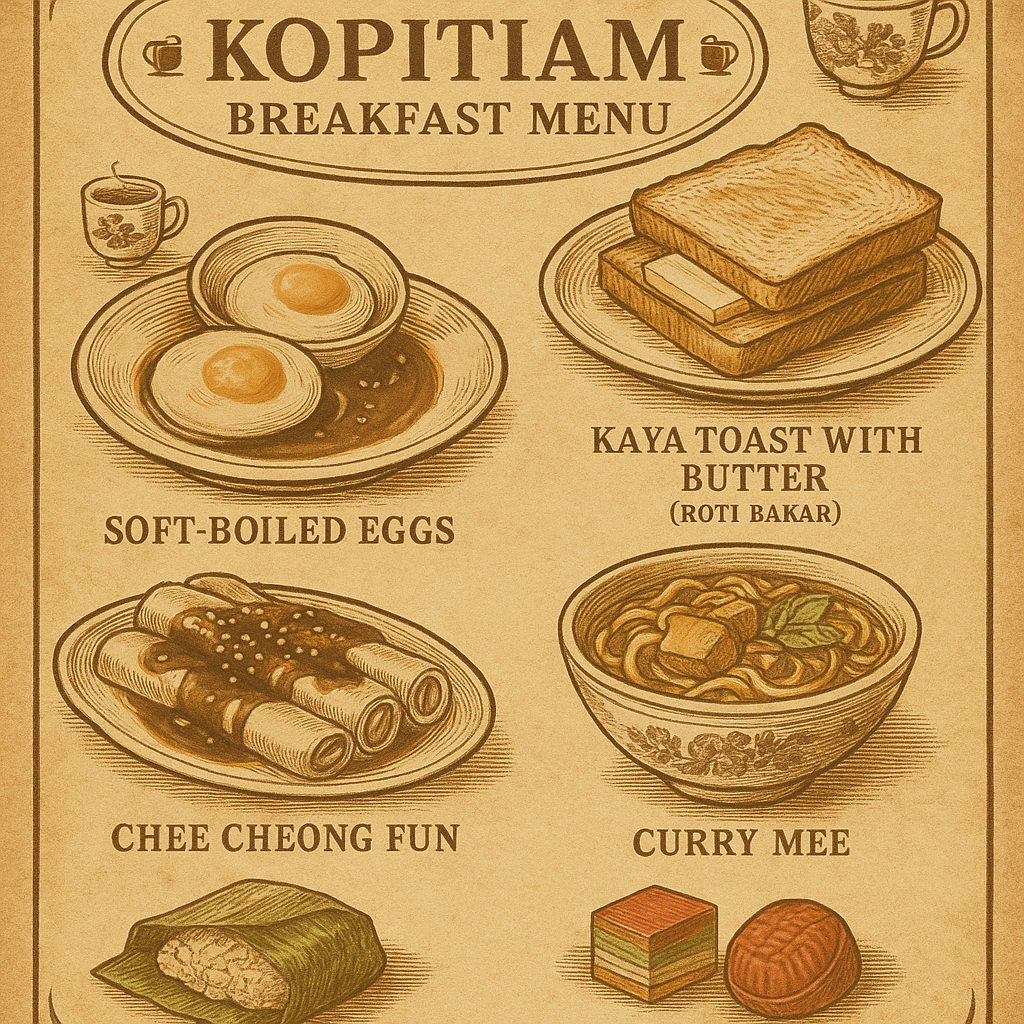
Not all kopitiam-goers have a sweet tooth. Some prefer savory options like:
- Half-boiled eggs with soy sauce and white pepper only
- Kaya toast dipped into eggs (controversial, but delicious!)
- Butter toast with curry or sambal
And don’t forget regional favourites like:
Chee cheong fun with warm barley
Nasi lemak bungkus with teh-O
Mee siam with kopi-C peng
And don’t forget regional favourites like:
- Nasi lemak bungkus with teh-O
- Mee siam with kopi-C peng
- Chee cheong fun with warm barley
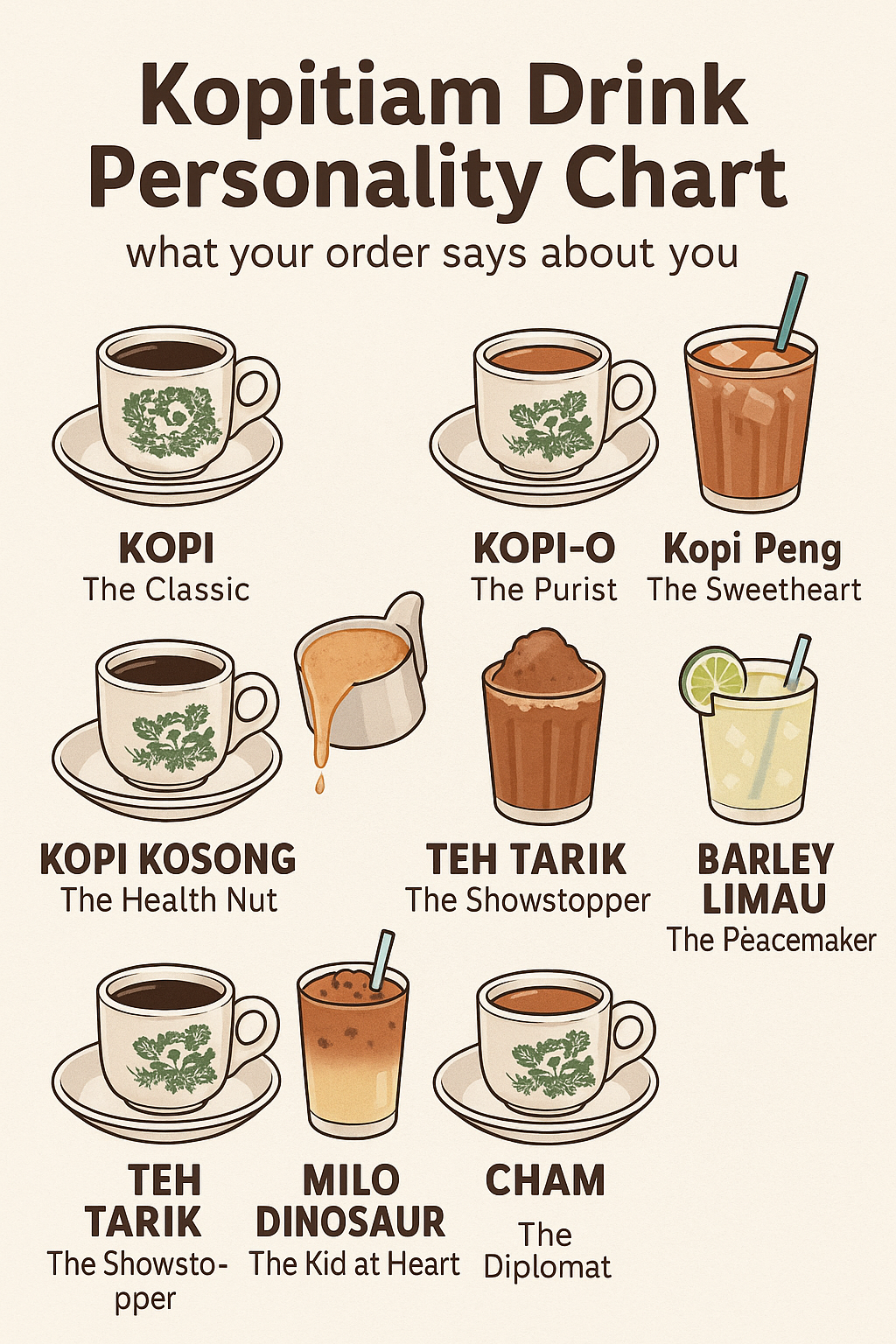
The Unspoken Personality Test of Kopitiam Drinks
What your go-to order says about you—no judgment, just kopi truth.
It’s often said in jest: “Tell me your drink, and I’ll tell you who you are.” But in the kopitiam world, there’s a little truth to it. Your drink order reveals more than just your caffeine preference—it can hint at your habits, your vibe, even your outlook on life.
Here’s a light-hearted (but eerily accurate) look at what your kopitiam drink might say about you:
☕ Kopi
You’re a classic. Reliable, steady, and maybe a little sentimental. You appreciate the original—no frills, no fluff. Probably the oldest sibling or the responsible one in your group.
☕ Kopi-O
Strong, independent, maybe a little intense. You like things straight-up and don’t mind the bitter side of life. Minimalist, no-nonsense energy. Also, you might secretly enjoy old movies or black-and-white TV.
☕ Kopi-C
You’re balanced—sensible with a touch of creaminess. You probably organize your calendar but still leave room for spontaneous fun. A safe bet in every situation.
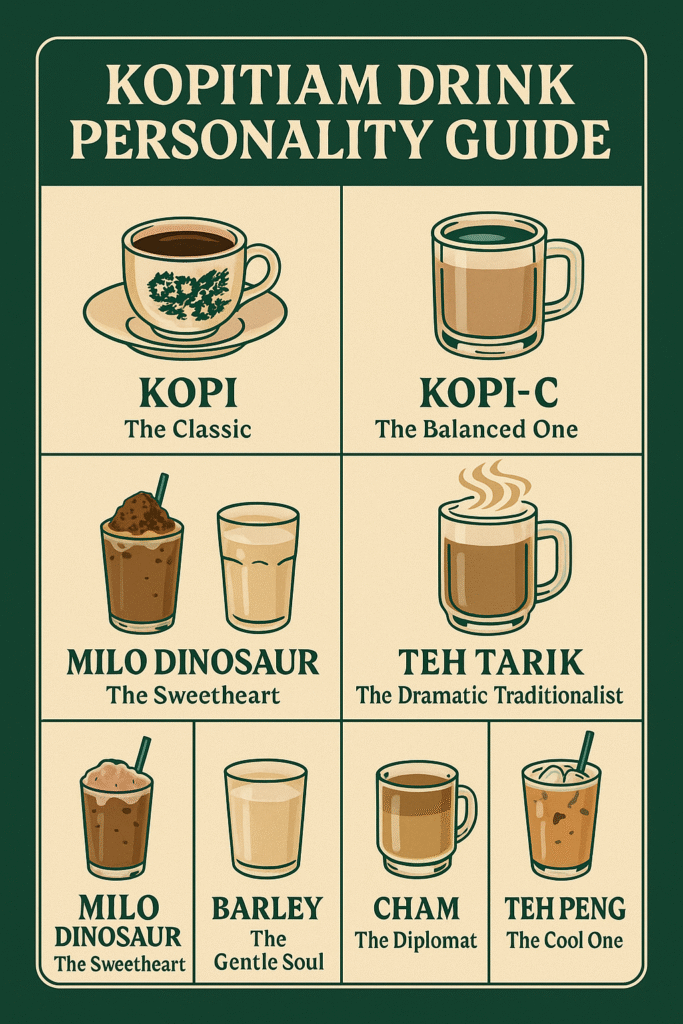
❄️ Kopi Peng / Teh Peng
You’re chill. Literally and emotionally. Iced drink lovers are usually laid-back, sociable, and flexible. You adapt easily and know how to stay cool under pressure.
😌 Kopi Kosong / Teh Kosong
Discerning and health-conscious. You’ve got discipline and self-control. Probably someone who reads nutrition labels and chooses your indulgences carefully.
🔥 Teh Tarik
You love tradition—and a bit of drama. Teh tarik is bold, frothy, and made with flair. You’re warm, expressive, and like things done with a personal touch.
🐉 Milo Dinosaur / Milo Godzilla
You have a playful spirit and a big sweet tooth. Life’s too short to drink boring stuff. You’re probably the “fun one” in your group—and yes, you take selfies before you sip.
🌿 Barley / Limau / Horlicks
Gentle soul alert. You prefer soft flavours and soothing routines. You’re thoughtful, maybe nostalgic, and definitely the peacemaker in most situations.
🌀 Cham (Coffee + Tea)
You see the best of both worlds. Adaptable, diplomatic, and always able to find common ground. People come to you for advice—because you blend ideas as easily as your drink.
💬 Local Joke:
“If they order Teh-C kosong kurang manis peng—run. They know exactly what they want in life.”
Regional Kopitiam Drink Variations
From Penang’s smoky brew to Singapore’s smooth blends—local tastes vary more than you think.
Though the core of kopitiam culture remains consistent across Malaysia and Singapore, the style, strength, and sweetness of drinks can change depending on where you’re sipping. Here’s how different regions have shaped the same kopi and teh into distinct experiences.
📍 Penang – Smoky, Rich, and Old-School
Penang kopitiams are known for their bold flavours. Coffee beans are often roasted with sugar and margarine, giving the brew a deep, smoky, caramel-like aroma. Locals love their kopi gao (thick) and slightly bitter. Kaya here tends to be firmer and more eggy.
🧠 Local Tip: In Penang, “kau” (strong) and “pui” (weak) are common ways to describe drink strength.
📍 Kuala Lumpur (KL) – Fast-Paced and Customised
In KL, kopitiam culture is fast-moving, and customisation is king. You’ll hear plenty of complex orders like “Teh-C kurang manis peng.” Kopi here is medium-bodied, and teh tends to be sweeter. Many urban kopitiams now offer fusion options—like oat milk kopi or brown sugar teh.
🛎️ Kopitiams in KL are often more modern, with air-con, QR ordering, and toast in Instagrammable stacks.
📍 Johor – Balanced and Butter-Heavy
Johor’s kopi tends to be more buttery, as beans are roasted with extra margarine or butter. Drinks are slightly oilier, thicker, and served hot with thick condensed milk. Locals here enjoy kopi and kaya toast in full, leisurely meals—especially in Muar, a kopitiam hotspot.
🍞 Muar’s kopitiam scene is famous for thick, fluffy toast and charcoal-grilled edges.
📍 Singapore – Smooth, Refined, and Efficient
Singapore kopitiams are known for their efficiency. Orders are taken quickly, and kopi is served smooth, slightly lighter, and very balanced. Singaporean kopi is often roasted with less sugar during the bean process, producing a cleaner brew.
🇸🇬 Some chains like Ya Kun and Toast Box have commercialised the style, bringing kopitiam culture to malls and airports.
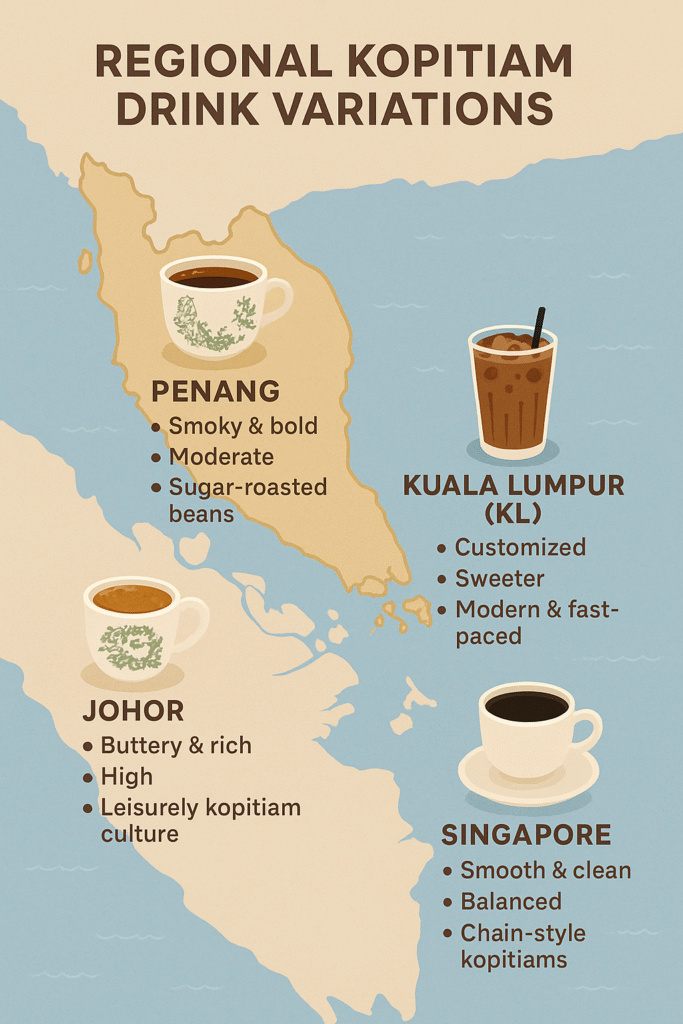
| Region | Coffee Style | Sweetness | Unique Trait |
|---|---|---|---|
| Penang | Smoky & bold | Moderate | Sugar-roasted beans |
| KL | Customised | Sweeter | Modern & fast-paced |
| Johor | Buttery & rich | High | Leisurely kopitiam culture |
| Singapore | Smooth & clean | Balanced | Chain-style kopitiams |
✅ Authentic & Comforting Kopitiam Drinks and Heritage Preservation
Old cups, simple drinks—but deep cultural roots.
In a region that’s rapidly modernizing, kopitiam drinks remain one of the few everyday rituals that connect generations. Truth is, the Ultimate Guide to Kopitiam Drinks, with each cup poured, each order shouted in local shorthand, keeps alive a story of migration, identity, and community.
Why Old Nostalgic Drink Traditions Still Matter
Kopitiam drinks aren’t just beverages. They’re time capsules.
- Every “kopi-O kosong” tells a tale of thrift and simplicity.
- Every “teh tarik” reflects a time when hand-pulled foam and flair mattered more than latte art.
- Every Milo Dinosaur carries childhood nostalgia in its sugary roar.
These drinks are everyday artifacts of multicultural influence—Malay, Chinese, Indian—and the Hainanese immigrants who first brewed them. And unlike trends, they haven’t faded.
The Role of Kopitiam Culture in Identity
For many Malaysians and Singaporeans, kopitiams are cultural anchors. They’re where:
- Generations gather—grandparents and grandkids share a table.
- Business meetings, matchmakings, and neighbourhood gossip take place.
- Students revise for exams, while retirees read newspapers.
Whether you’re ordering from a 70-year-old coffee uncle or a young barista wearing an apron with “Kopi King” stitched on it, the ritual is the same. It transcends class, race, and age.
💬 “Kopi brings us home. Even if we never left.”
From Nostalgia to National Identity
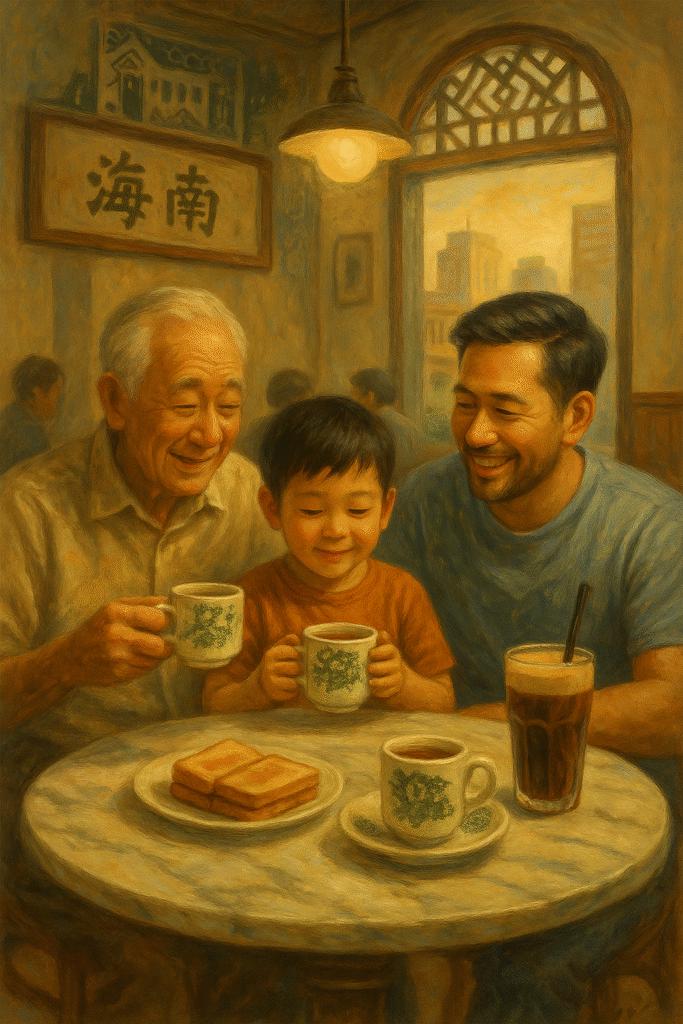
Whether you’re ordering from a 70-year-old coffee uncle or a young barista wearing an apron with “Kopi King” stitched on it, the ritual is the same. It transcends class, race, and age.
Governments and cultural bodies in both Malaysia and Singapore have made efforts to document and promote kopitiam heritage. Some kopitiams have even been recognized as intangible cultural heritage due to their role in community bonding and culinary continuity.
In short: kopitiam drinks are culture in a cup.
🍽️ Modern vs Traditional Kopitiam Recipes
How today’s versions compare to their nostalgic roots
Kopitiam dishes and drinks have evolved over time—some preserving their rustic charm, others reinvented for today’s fast-paced café culture. Let’s compare the old and new:
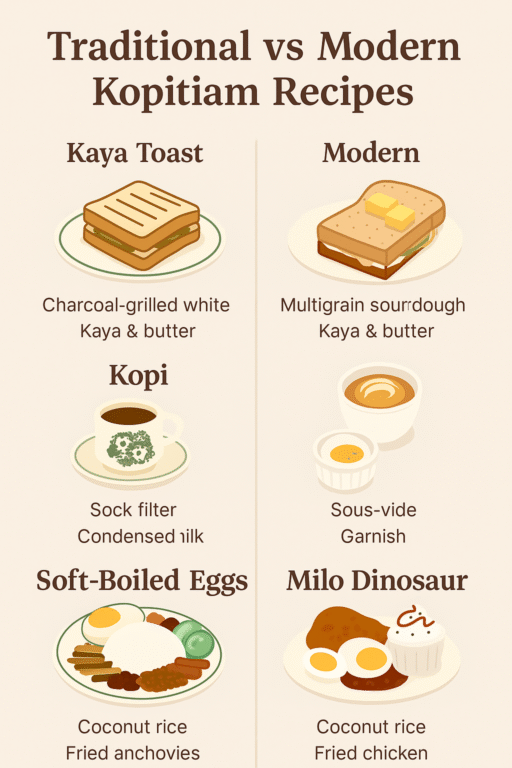
🥪 Kaya Toast
| Traditional | Modern | |
|---|---|---|
| Bread | Charcoal-grilled Hainanese toast | Multigrain sourdough or brioche |
| Spread | Homemade pandan kaya + cold butter | Pandan-coconut jam + whipped butter or coconut oil |
| Presentation | Cut diagonally, served on plate | Cut into cubes or served with espresso |
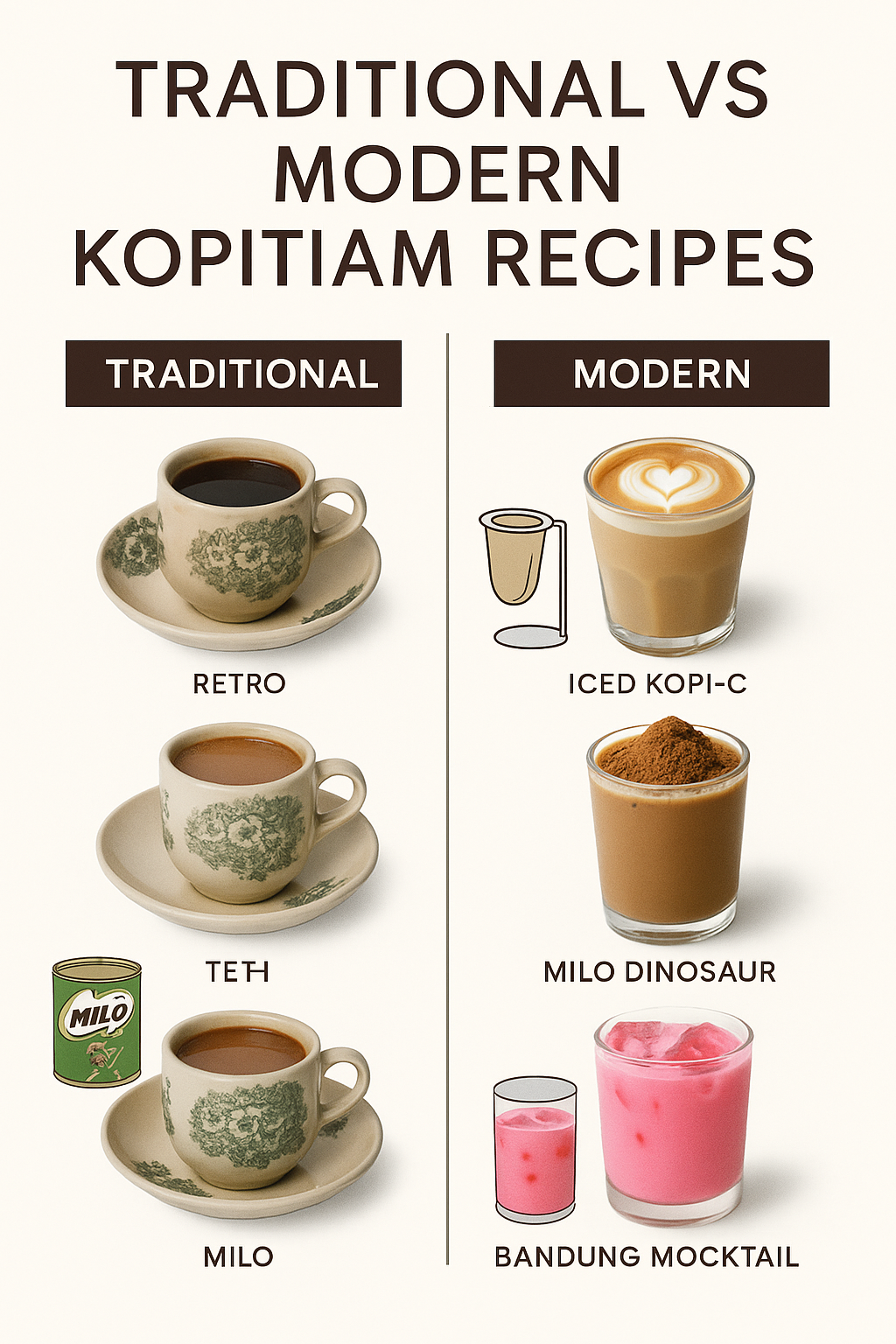
☕ Kopi
| Traditional | Modern | |
|---|---|---|
| Beans | Robusta beans roasted with margarine and sugar | Arabica blend, single origin |
| Brewing | Sock filter & tin kettle | French press or espresso machine |
| Milk | Condensed or evaporated milk | Plant-based milk, oat milk foam |
🍜 Nasi Lemak
| Traditional | Modern | |
|---|---|---|
| Rice | Steamed in coconut milk | Infused with herbs, served as sushi rolls or bowls |
| Sambal | Spicy anchovy chili paste | Milder sambal, mango sambal |
| Sides | Fried anchovies, peanuts, egg, cucumber | Chicken karaage, tempeh, avocado, quail eggs |
🧊 Milo Dinosaur
| Traditional | Modern | |
|---|---|---|
| Base | Milo + condensed milk + ice + Milo powder | Milo frappe, Milo affogato with ice cream |
| Toppings | Heap of Milo powder | Chocolate drizzle, whipped cream, toasted cereal |
🧠 Why Ultimate Guide to Kopitiam Drinks still Matters 🔗
❤️ 1. A Taste of Heritage
Each cup of kopi or teh is steeped in cultural tradition, passed down through generations of Hainanese immigrants and local communities in Malaysia and Singapore. From pulled Teh Tarik to Kopi-O Kosong, these drinks tell the story of a shared colonial and multicultural past.
🪑 2. More Than a Drink – It’s a Ritual
Ordering your favorite drink—“Kopi Peng kurang manis”—isn’t just about caffeine. It’s about rhythm, routine, and social belonging. The kopitiam experience fosters connection: locals chatting over kaya toast and soft-boiled eggs, seniors reading newspapers, and youth rediscovering old-school cool.
👨👩👧 3. A Bridge Between Generations
Kopitiams are intergenerational spaces. Youngsters learn to appreciate traditional values and flavors from their elders. Grandparents share stories. Parents translate the lingo. The kopitiam becomes a living classroom of taste, language, and memory.
🌍 4. Identity & Cultural Pride
In a world filled with modern cafés and global coffee chains, kopitiam drinks represent local identity. They’re proudly ours—not imported trends. To drink Kopi-C or Milo Dinosaur is to embrace a flavor that’s uniquely Southeast Asian.
🛡️ 5. Preserving the Unspoken Language
The way we order—Kopi-O Kosong Peng!—is a regional dialect of flavors. This “kopi code” is part of our cultural vernacular, and keeping it alive helps preserve language, lifestyle, and culinary heritage.
- Traditional: Keeps cultural heritage alive
- Modern: Appeals to new generations, dietary trends, and global taste
- The Best Approach: Celebrate both! Order the original, then try the twist.
🏁 Conclusion: More Than Just a Drink—It’s a Way of Life
☕ Final Sip – A Taste of Home in Every Cup
In every kopitiam cup—whether it’s Kopi-O Kosong or Teh Tarik—there’s more than just a drink.
There’s memory, identity, and belonging.
It’s the warmth of conversations shared with old friends.
It’s the sound of clinking cups and the aroma of roasted beans.
It’s the language you don’t read in books—only spoken between regulars.
Kopitiam drinks aren’t just about caffeine.
They’re about comfort, culture, and a connection that spans generations.
So the next time you sip your favorite order, pause for a moment and remember:
“You’re not just drinking coffee.
You’re drinking a story that began decades ago.”
Whether you’re sipping kopi-O in Penang, enjoying teh-C peng in Singapore, or sharing kaya toast and Milo with family in Johor, kopitiam drinks are more than a morning ritual. They represent culture and connection.
From the clink of ceramic cups to the shorthand lingo shouted across marble tables, every aspect of the kopitiam experience reminds us of our roots—and keeps tradition alive, one cup at a time.
So next time you order your favourite kopitiam drink, remember:
☕ You’re not just quenching thirst—you’re preserving heritage.
💬 Tell Us Your Order!
What’s your go-to kopitiam drink?
Drop your favourite in the comments below—or tag us with your kopi photos using #KopitiamGuide on Instagram.
📥 Bonus: Grab Your Free Kopitiam Placemat!
Download the Printable Kopitiam Breakfast Checklist – perfect for your next nostalgic breakfast spread!
🔔 Like What You Read?
✅ Share this guide with friends who love coffee, culture, and old-school charm.
✅ Bookmark this blog for your next kopi craving.
✅ Subscribe for future stories about Southeast Asian food culture, heritage, and more.